
Episodic memory helps us remember past events and supports flexible thinking. By forming connections between multiple memories, we are able to infer new knowledge, come up with creative ideas, and imagine possible future events. Our research examines how developmental differences in how events are encoded, organized, and retrieved in memory impacts these other cognitive abilities. Some specific questions include:

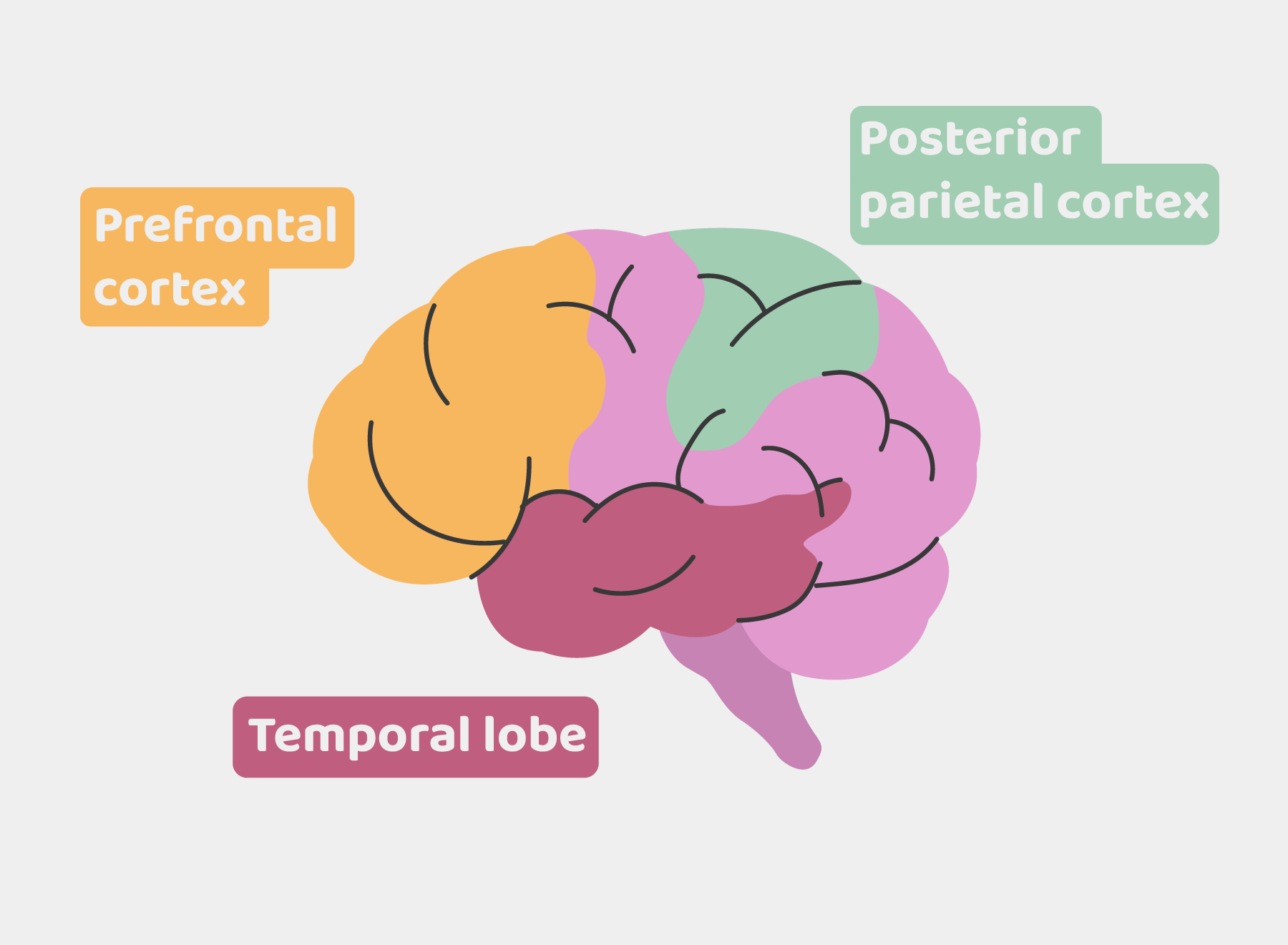
Our episodic memories fuel forms of flexible thinking. Imagining future events involves recombining remembered content, generating creative ideas benefits from retrieving multiple events, and new knowledge can be inferred from linking remembered events. Our research examines how children engage in these abilities, focusing on the neurocognitive mechanisms that support their development. We're particularly interested in how top-down control processes interact with episodic memory to support this development. Some specific questions include:
Research suggests individuals imagine possible future events by retrieving and recombining content from multiple memories to construct events that might possibly happen to us. If this is true, then the future events children and adults imagine may be constrained by what they've already experienced. There is also evidence that what individuals have experienced—such as environmental enrichment and adversity—may impact neural regions critical for future event imagination. Our research examines whether past experiences influence the type of future events individuals imagine as well as the neural mechanisms that support this ability. Some questions include:


Forms of flexible cognition enable individuals to create novel content, like imagined future events and creative ideas. This novel content may help them adapt to changing environments and promote resilience. Our research examines the connection between flexible cognition and resilience. Some questions include: